Rolo

Rolo

Rolo started from a simple observation: the people who hold a community together — rabbis, gabbais, shul administrators — were running everything from a phone, and every CRM built for them assumed a desk. Membership dues lived in one spreadsheet, donations in another, and the birthday you promised to remember lived in someone’s head. The brief was to design a CRM that works the way a community leader actually works: standing in a hallway after davening, one hand free, thirty seconds to log something before it’s forgotten. Every decision in the product had to survive that test, was it simple to do!

Client

Client

Rolo

Rolo

Service

Service

Design

Design

Sector

Sector

Product

Product

Year

Year

2026

2026

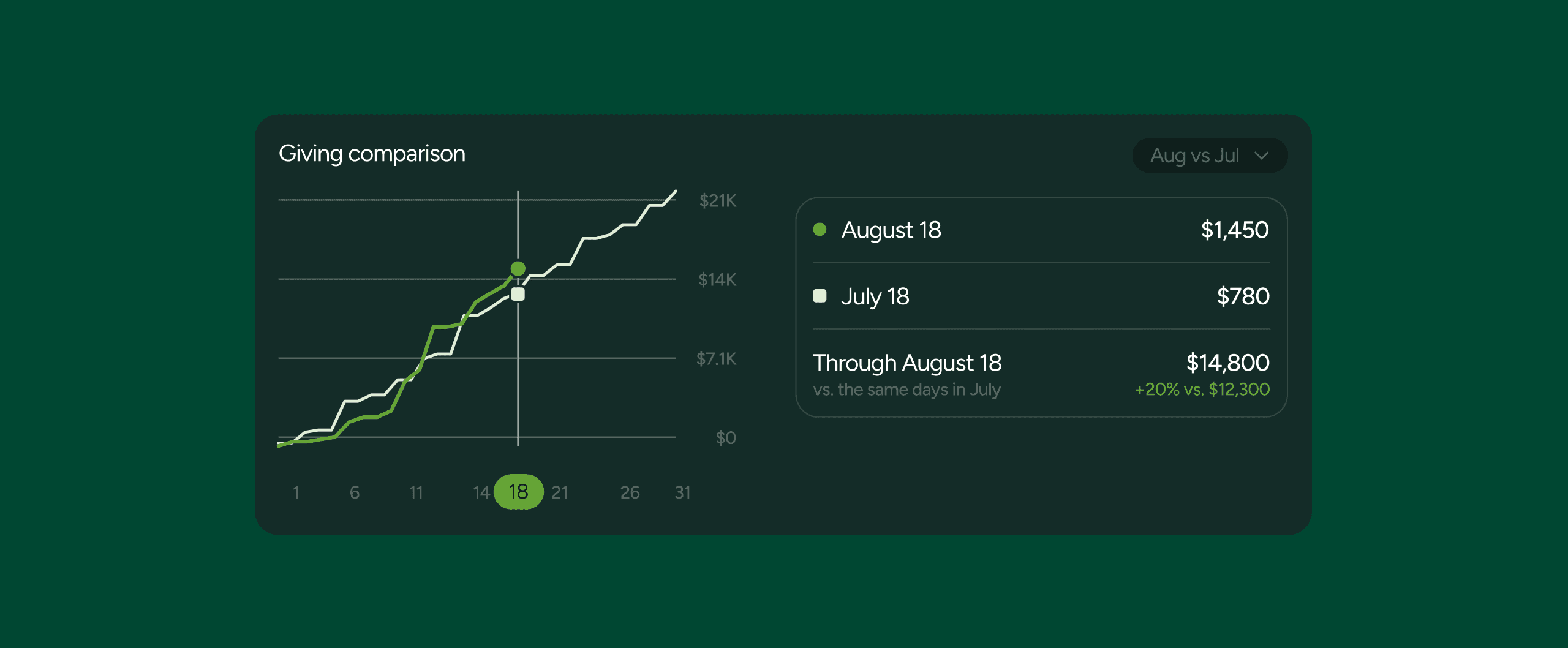
The visual language had to carry warmth without going soft. The interface sits on a deep evergreen with a single high-contrast green, so money, progress and confirmation all speak with the same voice — if it’s green, something good happened or is about to. Everything else recedes. That restraint is what lets a dense screen of dues, pledges and overdue tasks still read calmly at a glance.

The visual language had to carry warmth without going soft. The interface sits on a deep evergreen with a single high-contrast green, so money, progress and confirmation all speak with the same voice — if it’s green, something good happened or is about to. Everything else recedes. That restraint is what lets a dense screen of dues, pledges and overdue tasks still read calmly at a glance.

The hardest problem was the assistant. A rabbi doesn’t think in records — he thinks “Carl Feldman handed me a check at the bris today, for $180, write him a tax receipt and remind me to check in every two weeks.” That one sentence is three database writes, a document and a recurring reminder. Parsing it was the easy half. The design problem was trust: an assistant that silently writes to your books is a liability, not a feature. So the reply isn’t a paragraph — it’s a stack of confirmation cards. Each card carries one action, the exact amount, the check number and the receipt flag, and nothing is committed until it’s confirmed. The copy says so out loud. The assistant is allowed to be confident and still be wrong, because the user holds the last click. That single rule shaped every AI surface in the product, and it’s the reason the feature reads as an assistant instead of an autopilot.

The hardest problem was the assistant. A rabbi doesn’t think in records — he thinks “Carl Feldman handed me a check at the bris today, for $180, write him a tax receipt and remind me to check in every two weeks.” That one sentence is three database writes, a document and a recurring reminder. Parsing it was the easy half. The design problem was trust: an assistant that silently writes to your books is a liability, not a feature. So the reply isn’t a paragraph — it’s a stack of confirmation cards. Each card carries one action, the exact amount, the check number and the receipt flag, and nothing is committed until it’s confirmed. The copy says so out loud. The assistant is allowed to be confident and still be wrong, because the user holds the last click. That single rule shaped every AI surface in the product, and it’s the reason the feature reads as an assistant instead of an autopilot.

What shipped is a CRM that fits in a pocket without feeling like a lesser version of a desktop tool. The same screens that log a $180 check also sell seats for Rosh Hashanah, project next quarter’s giving, and quietly mention that Sarah’s birthday is on the 27th — with the letter already drafted. The measure here was never feature count. It’s that holding a community together stops depending on remembering everything.

Rolo a powerful modern easy to use CRM for rabbis and shul leaders

Credits

Credits

Product Design

Product Design

Tsuriel

Tsuriel

Backend Engineer

Backend Engineer

Shahziab Ali

Shahziab Ali

iOS Engineer

iOS Engineer

Roman Sundurov

Roman Sundurov